All Categories
Featured
Expert Irrigation Repair for Optimal Water Efficiency
Table of Contents
Never ever stack mulch up around trunk of tree. Leave a 10 inch radius from trunk of tree.
Rock locations shall include a landscape fabric. 1:11 Cornell Structural Soil Mix will be made use of under all hard surface areas where trees are to be planted in tree wells surrounded by concrete, pavers, or asphalt.
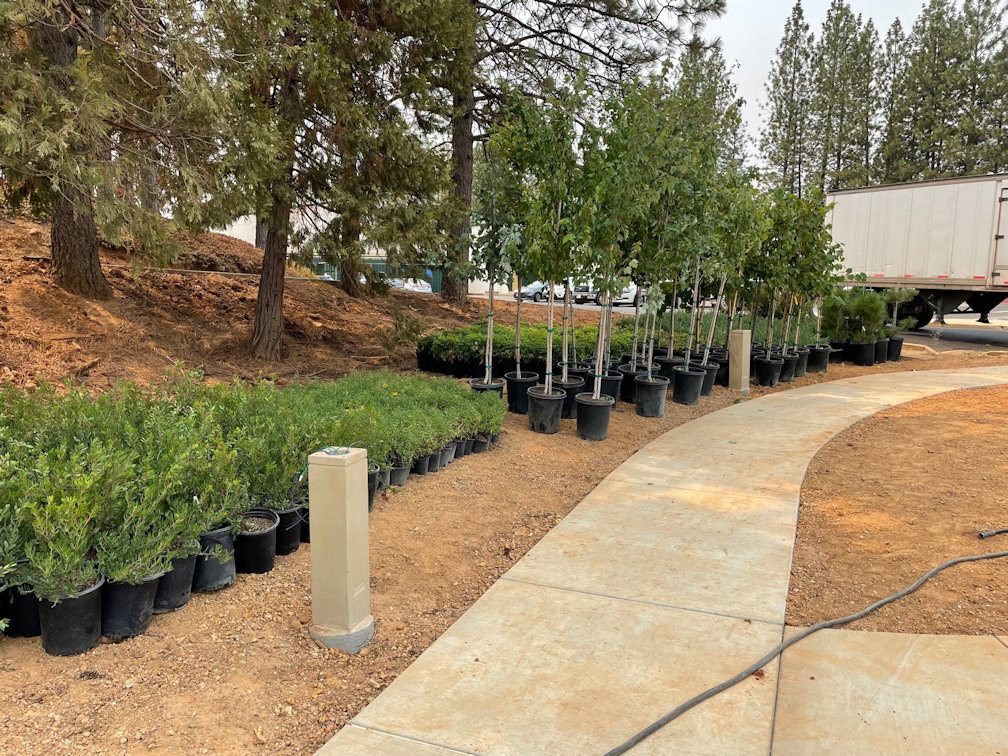
1:12 Tree ball and burlap root ball diameter will be 12" for every 1" of trunk size. 1:14 The professional will inform owners representative to approve plant positioning before the planting of all trees, shrubs, & grass.
How Data-Driven Canopy Management Mitigates Campus Liability
1:16 Trees that have been grown tied straight to stakes will not be accepted. 1:17 Trees and shrubs saved on site shall have their containers or root balls secured from direct sun light by contractor. For balled and burlap (B & B) trees, heel in and cover with mulch as much as top of root ball.
1:20 Install plant material plumb and in the center of pit a little above nearby grade. 1:21 Do not prune any plant material without permission from owner's agent.
1:23 Container plants with largely swirling stiff roots inside the container surface area will not be accepted. 1:26 There shall be a pre-construction conference with owner's agent before building starts.
Exceptions permitted only with approval of owner. Existing trees shall be protected where Tree stacking technique to be reviewed with Owner. Contractor to submit landscape defense and watering strategy, and schedule to Landscape design will minimize water usage and Water conserving native plant materials will be utilized to the best level Grading, dust control, weed control, curbs, gutters, streets, off-street parking and sidewalks will conform to regional ordinances and local style and website building and construction requirements.
Emergency Arborist Services for SoCal Campuses
(refer to ANSI 300 requirements) Thinning: The canopy of a tree occasionally ends up being so thick that the canopy requires to be thinned. Thinning is the removal of lateral branches at their point of origin or the reducing of a branch or stem by cutting a lateral big sufficient to assume the terminal role.
Trees might need to be thinned to reduce storm damage of to allow better air circulation to decrease disease problems. Trees might be thinned as a bird control measure to produce a less desirable roosting site. More frequently, trees are generally thinned to permit additional light to reach plants growing beneath the canopy.
There are several reasons for raising the crown of a tree. Unobstructed exposure is essential to improve the security and security of the school. Along streets and parking lots, it is important that the trees have the suitable clearance of 14 ft. 6in. for automobile traffic. Pedestrian sidewalks will not surpass 7 ft.
Deadwooding: Throughout the life of a tree, it is a normal procedure for some branches in the canopy to die while brand-new branches are being created. Other branches die due to the affect of illness of other stress factors. In a managed city forest, trees regularly require to crown cleansing to get rid of dead, infected and dying branches.
Evaluating New or Traditional Irrigation Management
This is particularly important for nonessential larger than 4 inches, which might trigger severe injury to people and residential or commercial property. Removal: Like all life on earth, trees eventually decline and pass away. Studies have actually revealed that due to the several stresses that exist in the city environment, trees have a significantly reduced life span.
There are 2 primary reasons for eliminating a tree: aesthetics and safety. When a tree decreases into poor condition, it has surpassed its useful life and should be removed so that it can be replaced with an energetic healthy tree. In a lot of cases, a tree, despite visual appearance, positions a risk to people and residential or commercial property and should be gotten rid of.
These trees need to be pruned or shaped to direct future growth. The outcome of this kind of pruning is a more beautiful and structurally sound tree and a substantial decrease in future upkeep expenses. Cabling/bracing: Cabling and bracing is the art and science of utilizing cable televisions and/or wood screws (braces) to repair or lengthen the usefulness of a tree.
Braces are typically used in mix with cable televisions to assist stabilize of pull split trunks back together. Cabling and bracing need to not be utilized to fix dangerous tree problems, however they can be beneficial in prolonging the life of a considerable tree. Cavity filling: Trees suffer mechanical damage from a variety of sources including landscape maintenance devices, vehicles, the environment and other aspects.
Ensuring Longevity With Professional Arborist Support
Cavities can be concealed within the trunk, or they can be exposed to the surface leaving a little or large open hole. It ends up being hard or difficult for the tree to grow throughout the area and fix the damage, so it in some cases becomes required to fill the cavity so that callus can grow across the hole and close off the cavity to the outside.
Stumps detract from the visual look of the campus and can develop security risks. Stumps likewise impact other landscape maintenance activities by creating a barrier that needs to be cut around. Stumps are eliminated by utilizing a machine to grind the stumps below the soil surface area. Fertilizing: Continual elimination of leaf particles around a tree eventually leads to a loss of valuable nutrients that would usually be offered to a tree in a natural forest.
This normally involves injecting a soluble, slow-release fertilizer into the soil so that it can be used up by the root system. Mulching around the trees is likewise important for returning nutrients to the soil. Spraying: Occasionally, trees are attacked by different insects and microorganisms and should be dealt with to protect them from illness.
Improving Campus Landscape Resilience With Advanced Tech
Soil changing: Biostimulants and Mycorrhizal fungi are integrated into the soil profile near the root system of the tree to enhance health and vitality. The University prioritizes water-conserving landscape design that requires very little maintenance. Because the University campus is a designated arboretum, it features a variety of plants, including non-native species and drought-intolerant ranges.
The university arboretum contains edible plants such as fruit trees, berry bushes, and herbs as ornamentals, however they were not planted for use as a food source, and new edible plants are not being included to the landscaping. Poisonous plants are not used near water, dining establishments, and children's facilities.

Latest Posts

Elevating Property Standards with Deadwood Removal
Expert Irrigation Repair for Optimal Water Efficiency

How Advanced Tree Care Boosts Campus Resilience